- Home
- Departments
- Parks & Recreation
- Conservation
Conservation
Crestwood is committed to protecting the natural beauty of our community through thoughtful conservation efforts that preserve and enhance parks, green spaces, and native habitats. From sustainable landscaping practices to ecological restoration, the City is taking active steps to promote environmental stewardship for future generations — and we invite residents, volunteers, and visitors alike to explore these initiatives and get involved.
Nature-Friendly Certifications
As part of this commitment, Crestwood is proud to be Missouri’s first Bee City USA affiliate, helping lead the way in pollinator conservation and habitat protection. The City is also recognized as a Tree City USA community, reflecting our ongoing dedication to growing and maintaining a healthy, diverse urban forest. These national programs highlight Crestwood’s efforts to promote biodiversity, support native ecosystems, and create a greener, more sustainable future for all.
Learn more about Bee City USA and Tree City USA to see how these initiatives are helping shape a stronger environment — and how you can be part of it.
 About the Back To Nature Project
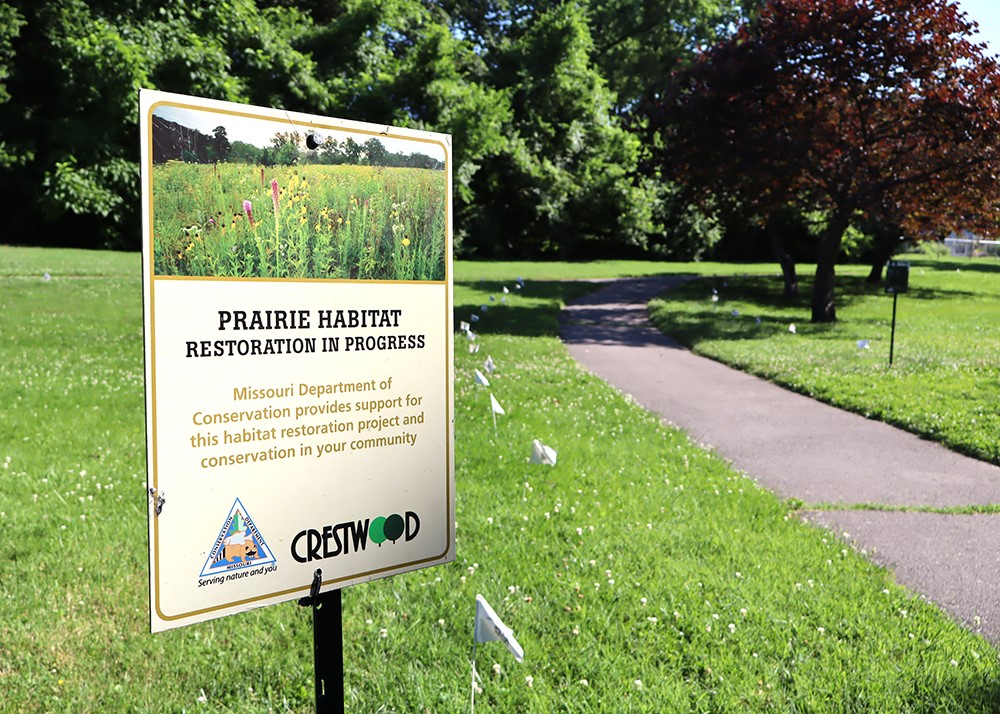
Crestwood’s Back to Nature project is a multi-phase ecological restoration effort aimed at reestablishing natural habitats such as woodland, prairie, savanna, and wetland ecosystems that support pollinators, birds, and other urban wildlife. The project will create seven acres of natural habitat, native gardens, and a rain garden at Crestwood Park, with partial funding from the Missouri Department of Conservation.
This project is a collaborative effort, made possible by MDC and a dedicated group of local partners including Beautify Crestwood, Open Space STL, Forest ReLeaf of Missouri, DTLS Landscape Architecture, and local schools and student groups.
For more information about Crestwood's Back to Nature project, contact the Project Manager/City Conservationist Angie Weber at conservation@cityofcrestwood.org.
Why was Crestwood Park selected?
Once established, deep-rooted native plants will absorb runoff from Mulberry Creek, helping to reduce flooding and erosion. Replacing high-maintenance turf with native vegetation will also lower long-term mowing and maintenance costs. Native plants are well adapted to local climate and soil conditions, requiring less water, fertilizer, and upkeep than non-native species or turf grass. They also provide essential habitat and food sources for pollinators, birds, and other wildlife—helping restore ecological balance in urban areas.
What is the project timeline?
Phase 1: 2025–28, North of Mulberry Creek
- Remove and control invasive species along the creek and property boundaries (volunteer work and Open Space STL partnership began in 2022).
- Seed prairie, woodland, and grassland areas.
- Plant trees.
- Phase 2: 2026–27, South of Mulberry Creek
- Continue invasive-species work along the creek.
- Install formal native gardens, a rain garden, and grassland areas.
- Plant additional trees (volunteer planting began in 2025).
Who is performing the work?
Compass Native Landscapes, a St. Louis firm specializing in native habitat creation, ecological stewardship, and invasive-species control. Their staff members are highly trained and experienced in delivering ecological services across the region.
Will herbicide be used?
Yes, limited and targeted herbicide applications are required to meet project goals.
Why does herbicide need to be used?
Dense stands of invasive species—primarily along creek banks and property boundaries—must be removed before native plants can thrive. These species include bush honeysuckle, Japanese honeysuckle vine, winter creeper, grapevines, garlic mustard, mimosa trees, and others. Because these plants are aggressive and outcompete natives for water, sunlight, and nutrients, herbicide is a necessary tool to control them.
The proposed prairie, woodland, and grassland habitat areas currently consist of mowed turf grass. This existing vegetation must be removed prior to seeding with native grasses and flowers to reduce competition and provide space for new plantings. Given the size of the project, standard practice includes several rounds of broad-spectrum herbicide applications.
What does the herbicide application process include?
All herbicide applications will be conducted under favorable weather conditions by certified applicators licensed through the Missouri Department of Agriculture. Public signage will be posted in advance, and temporary path or disc golf closures may be in place during and for up to two hours after application.
How can I get involved?
Each spring and fall, residents are invited to participate in volunteer workdays to assist with planting, invasive species removal, and other hands-on conservation tasks. These events offer a rewarding way to connect with nature and support the long-term health of Crestwood’s parks.
Native Habitats in the St. Louis Region
The St. Louis region was once a diverse ecological landscape, shaped over millennia by natural forces and human stewardship. Native habitats across the area included tallgrass prairies, oak-hickory woodlands, open savannas, and extensive wetlands, especially near the confluence of the Mississippi and Missouri rivers. This mix of ecosystems supported a wide variety of plant and animal life, including countless species of pollinators, birds, and mammals.
Indigenous peoples—including the Osage Nation, tribes of the Illini Confederacy, and the Mississippian culture—actively shaped the land through agricultural practices and intentional burning. These seasonal burns helped maintain the balance between prairie and woodland, promoting the growth of nutrient-rich grasses and preventing woody encroachment. Forests were primarily made up of oak and hickory, with understory species like eastern redbud, serviceberry, and flowering dogwood. Along river corridors trees such as American sycamores, cottonwoods, bald cypress, black gum, willows and ground covers such as rushes, sedges, and native iris formed dense riparian forests.
The Mississippian culture left a lasting mark on the region’s landscape through the construction of massive earthwork mounds. These ceremonial and civic structures gave rise to St. Louis’s historic nickname, “Mound City.” While many mounds have been lost to development, their legacy remains a powerful testament to the area’s Indigenous history.
Before European settlement:
- Prairies dominated much of the landscape—especially north of the Missouri River—covering nearly half of what is now the St. Louis area. These tallgrass prairies featured a robust groundcover of native perennial grasses and wildflowers.
- Savannas formed transitional zones between prairie and woodland, with scattered trees and grassy understories.
- Woodlands and forests provided shaded habitat across uplands and river valleys.
- Wetlands, particularly in the Confluence Floodplain, created critical ecosystems for birds, amphibians, and aquatic species.
With the arrival of European settlers and the expansion of agriculture and urban infrastructure, the region’s native habitats began to disappear. Land was cleared, plowed, and paved. Invasive plant species, such as bush honeysuckle and winter creeper, further displaced native flora. By the 20th century, most prairies had vanished, wetlands were drained, and remnant forests were fragmented.
Despite these losses, pockets of native habitat still exist—and today, groups are working to restore them. Projects like Crestwood’s Back to Nature initiative aim to bring back prairie grasses, wildflowers, and woodland understories, creating space once again for pollinators, birds, and community connection to the land.
Street Tree Program
Residents are encouraged to help grow and maintain Crestwood’s urban forest by planting street trees in the public right-of-way adjacent to their property.
How It Works
If planting requirements are met and an application is submitted, residents may plant an approved tree in the City right-of-way. Eligible residents may receive a tree, planted at no cost, depending on availability, funding, and program requirements. The species must be selected from the City’s Acceptable Street Tree List, or receive prior approval.
- Click here to fill out an application, view planting requirements, and a list of acceptable species.
Beatification Grant
The City of Crestwood offers several programs to enhance the community, including the Beautification Grant, which provides up to $500 to residents or neighborhood groups for projects that improve public spaces or private property.
- Click here to fill out an application.
Honeysuckle Removal
Visitors to Crestwood’s parks may notice areas where vegetation has been cleared. What may appear to be the removal of trees is actually part of an ongoing effort to eliminate bush honeysuckle—one of the most aggressive invasive species in the St. Louis region. To help preserve the health of native trees and plant life, the Parks & Recreation Department and Crestwood Conservation Crops, is actively working to remove this invasive species and restore the natural landscape within City parks.
- The City hosts volunteer honeysuckle removal events in the spring and fall—check the City calendar for upcoming dates and opportunities to get involved.
What Is Bush Honeysuckle?
Bush honeysuckle (Lonicera maackii) is a non-native shrub originally from Asia. It poses a significant threat to native ecosystems by outcompeting local plants for light, water, and nutrients. Its dense growth crowds out desirable native species, and while its berries may appear beneficial, they offer poor nutritional value for birds. In areas where it is allowed to thrive, bush honeysuckle has also been linked to increased populations of ticks and mosquitoes, posing additional environmental and health concerns.
Residents who find bush honeysuckle on their property are encouraged to take steps to remove it. A variety of removal methods are available, and the most appropriate technique depends on factors such as the size of the infestation and the maturity of the plants.
More Information
- Video: Removing bush honeysuckle from Missouri Department of Conservation
- For more information on bush honeysuckle and how to effectively remove it, visit the Missouri Botanical Garden’s guide to bush honeysuckle.
- Additional resources on honeysuckle control and native plant conservation can also be found through the Missouri Department of Conservation.
Tree Planting
Trees are one of the most powerful tools available for conserving natural resources and creating healthier communities. When properly planted and maintained, trees can:
- Improve air and water quality
- Reduce stormwater runoff and soil erosion
- Lower energy costs by providing shade and windbreaks
- Boost property values
- Create habitat for birds, butterflies, and other wildlife
- Beautify neighborhoods and provide natural spaces for relaxation
The City hosts tree planting events in the spring and fall—check the City calendar for upcoming dates and opportunities to get involved.
Government Center
The landscape surrounding the Crestwood Government Center and along Sappington Road is being transformed into a cohesive, environmentally friendly pollinator garden thanks to a collaborative effort between the City, Beautify Crestwood, the City’s Conservation Consultant Angie Weber, and native landscape expert Scott Woodbury of Cacalia Garden Design & Wilding.
The redesigned garden features 64 plant species, 45 of which are native to Missouri and surrounding states, and was thoughtfully planned to provide year-round visual interest. From vibrant blooms in spring, summer, and fall to subtle textures in winter, the space enhances Crestwood’s natural beauty while promoting sustainable landscaping practices.
Get Involved
Beautify Crestwood seeks volunteers to help maintain this native garden. Workdays are held on the first and third Fridays of each month from 10 a.m.-12 p.m. No registration is required—volunteers can meet near the Crestwood sign.
- Email Beautify Crestwood for more information.
Community Center
Outside the Crestwood Community Center, you’ll find a vibrant pollinator garden filled with native flowers and grasses that support bees, butterflies, and other important pollinators. The garden was started by Tom Krauska, a founding member of the City’s original Beautification Committee and a current volunteer with Beautify Crestwood.
Over the years, the garden has been carefully maintained and expanded while securing several certifications. Today, the space is recognized as both a Monarch Waystation and part of the Bee City USA network. Look for signs posted in the garden to learn more about these efforts and the plants that make this space so special.
Sappington Park
Several gardens are maintained throughout the Sappington Park, including a pollinator garden and an herb garden. The pollinator garden is located next to the sidewalk by the pond, while the herb garden can be found in front of the picket fence on the south side of the museum and on the east side of the Resident Manager’s cottage.
Both gardens attract pollinators such as bees and butterflies. In the herb garden, you’ll find borage, basil, dill, common milkweed, lavender, bee balm, parsley, and rosemary, among others—all allowed to flower to benefit our pollinator friends.
The pollinator garden features a variety of native shrubs, trees, and flowers, including ninebark, American beautyberry, false indigo, lemon mint, bee balm, blue asters, balloon flowers, and swamp milkweed. Each season, the gardens host monarch butterfly caterpillars, honeybees, and many other pollinators. Visitors are always welcome.
All annual plants are purchased locally, and many seeds are collected on-site for use the following season. Extra seeds are also shared through our seed library for park visitors to enjoy.
Tree Care & Maintenance
Caring for trees is key to keeping them healthy and strong for generations to come. Whether a tree was planted by the City or a property owner, proper care helps protect the tree and surrounding infrastructure.
Tree Care Resources
- Planting Video from Missouri Department of Conservation
- Pruning Video from Missouri Department of Conservation
- Tree/forestry video playlist from Missouri Department of Conservation
- Habitat Hints video playlist from Missouri Department of Conservation
Care & Maintenance Tips
- Maintain all trees and plantings in a healthy and neat condition.
- Avoid trimming or mowing too close to young trees—string trimmer damage is a leading cause of death for young trees.
- Remove any vegetation that interferes with sidewalks, streetlights, traffic signs, or utilities.
- Remove any dead or diseased trees that pose a risk to people or property.
- The Director of Public Services (or a designee) may order the pruning or removal of trees that violate City Code Section 26-21.
Avoid Tree Topping
Tree topping, the practice of cutting back large branches to stubs, can severely harm a tree. It creates large wounds that invite disease, decay, and insect damage. Topped trees often send out weak, fast-growing shoots that are more prone to storm damage, leading to higher maintenance costs and a shorter lifespan.
If a tree is being topped for clearance under wires or structures, it was likely planted in the wrong location. Consider removing and replanting in a more suitable spot or choosing a species with a smaller mature height.
- Always hire a reputable tree service. If a company routinely tops trees, it may lack proper knowledge. Don’t hesitate to get a second opinion.
- Educate yourself on proper pruning. Resources like the Missouri Department of Conservation and Arbor Day Foundation offer excellent guidance.
-
-

2026 City of Crestwood Budget Preview
The Board of Aldermen approved the FY2026 budget which aligns with the calendar year. This budget reflects the City’s commitment to maintaining strong financial health while investing in essential services, infrastructure, and community amenities. Read on... -
Mayor’s Message: Looking Back at 2025
From battling winter storms to breaking ground on The Cliffs, 2025 was a year of resilience and progress for Crestwood. Guided by values of service, caring, and connection, the City came together to achieve milestones that will shape our future. Read on...
/CivicAlerts.aspx